Tag: database

  • Where we get our information

    Where we get our information

    Hello, Jaybee here again. You might be wondering, where do we get information to fill up our bus database? This short blog will explain how we process information to display in our database.

    Model Information

    For standard models and its subcategories (vehicle model, body, chassis, engine), many of the information is readily available online. For some brands, information comes more easily than others: China brands, for example, usually has almost all the needed information on their websites. In contrast, local body assemblers do not usually post complete specifications, as they vary depending on the chassis used as the base of the bus. Sometimes we stumble upon obscure files that contain the needed information, but most of the time we just have to admit defeat and leave some information blank (not literally blank, as I usually place a “no data” annotation where I don’t know the information). Thankfully, there are a lot of third-party websites that, like us, collect information about engines, bus units, and the like, which we use as reference to many information we share in Bus Database PH. Thus, you may notice that our content is quite similar to others, but that’s the beauty of information, it can be conveyed by anyone for everyone’s benefit.

    Route and Bus Information

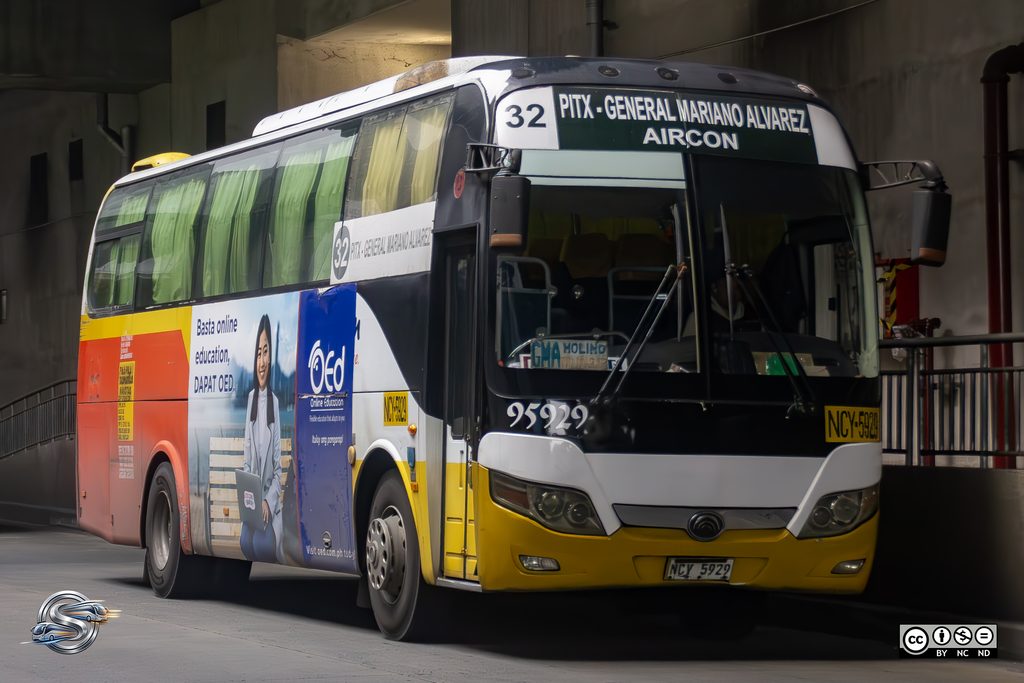
    For the routes, our go-to reference is the government agency in charge of franchising, the Land Transportation Franchising and Regulatory Board (LTFRB). Occasionally, the LTFRB releases public documents that list some routes and/or units as part of new relevant policies or information, which we use as reference to document the existence of such routes and units. For some other routes, the route descriptions printed on the bus units is sufficient for us to define it. It’s just a matter of going outside and seeing things in actual operation, basically.

    Information gathering for the bus database is not a one-man job. Behind the scenes, fellow bus enthusiasts provide their help in identifying certain models, routes, and bus units, to provide a more accurate description of everything we encode in the database. This boosts our confidence that what we provide to end-users is genuinely correct. But of course sometimes we slip up because we’re only human, and we apologize if ever you come across few things that need to be corrected.

    With so many information in the bus database, you might think we might have a hard time compiling it all, and you may be right. But every patronage of the Bus Database PH makes it all worth the effort. So I hope you support our endeavor in archiving bus photos and information in the Philippines by always visiting our site and utilizing our Bus Database as much as you can! In future blog posts, we’ll discuss some bus-related concepts, so I hope you will all stick around!

  • About the Bus Database

    About the Bus Database

    Hi to all! Today, I’ll be talking about the contents of the bus database, what to expect from it, and the future developments for the site.

    The Philippine Bus Database is what it sounds like: a repository of data about buses here in the Philippines. My aim is to provide a comprehensive collection of photos and information about buses around the Philippines. The database is divided into sections, which we shall discuss in detail.

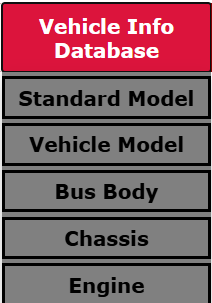
    The first part is the Vehicle Info Database, divided into 5 subsections. The Standard Model database lists the production model buses running in the Philippines. Some of those models might be different from what is sold globally, so I should make it clear that models to be listed here are standard models for the Philippine market; examples include the unique Yutong ZK6105H, which as far as I am aware is produced in China yet sold only in the Philippines.

    The Vehicle Model subsection lists all models available in the Philippines, now including the non-standard ones. The models are differentiated whether they are sold as completely built units (CBU), knockdown units (CKD or PKD), or as bare chassis models to be installed with a body.

    The Body section lists the bus body models running in the Philippines. It may be a body that was made by the brand maker itself (CBUs) or by a third-party body assembler, and may have a name different from the vehicle model.

    The Chassis section lists the bus chassis used in the Philippines, distinguished by its structure (ladder frame, integral, monocoque, modular, etc.). A semi-monocoque bus will have the same model listed as its body, while a vehicle model sold as a bare chassis will have the same model name in the Chassis section.

    The Engine section, as you may have guessed by now, will of course list the engines used by buses here, distinguished by the combustion type, power, torque, and emission rating. Electric motor models will be listed here as well.

    The second part is the Bus Database section, listing both individual Buses and the Routes where buses run. Information in the Bus List section include operator trade name, body number, and the specifications of the bus. The Route List contains the route description, the type of service (denomination) for the route as well as the location of its endpoints.

    Now, you might be wondering, how about the bus plate number, chassis and engine numbers, the data for the operator, or the franchise list? It is known to me that one of the most sought-after data is about franchises, but you see, all these parameters I mentioned are covered by the Data Privacy Act of 2012, which controls how personally identifiable information can be released. Some of our bus operators are sole proprietors, who are protected by the DPA, and displaying the information we discussed, while harmless by themselves, may lead to privacy concerns when combined with other data. And while corporations are not covered by the DPA, I decided that for uniformity and fairness, that those personally identifiable information that I do not display for sole proprietors be hidden for corporations as well. But, of course, if you need that kind of information, you’re better off going to the LTFRB anyway, since they are more equipped to handle those kind of requests.

    The third section is the Photo Archive where you can access the different photostreams for our contributors. We have received commitments from various bus photographers to contribute to our project, so always visit our site for updates on the photostreams!

    That’s all I have for now. In later posts, we shall discuss certain aspects of the database, clarifying some concepts, and answering some frequently asked questions. You may visit the bus database through this link. Ciao!