
Hi to all! Today, I’ll be talking about the contents of the bus database, what to expect from it, and the future developments for the site.
The Philippine Bus Database is what it sounds like: a repository of data about buses here in the Philippines. My aim is to provide a comprehensive collection of photos and information about buses around the Philippines. The database is divided into sections, which we shall discuss in detail.
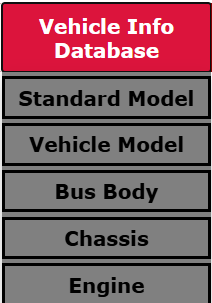
The first part is the Vehicle Info Database, divided into 5 subsections. The Standard Model database lists the production model buses running in the Philippines. Some of those models might be different from what is sold globally, so I should make it clear that models to be listed here are standard models for the Philippine market; examples include the unique Yutong ZK6105H, which as far as I am aware is produced in China yet sold only in the Philippines.
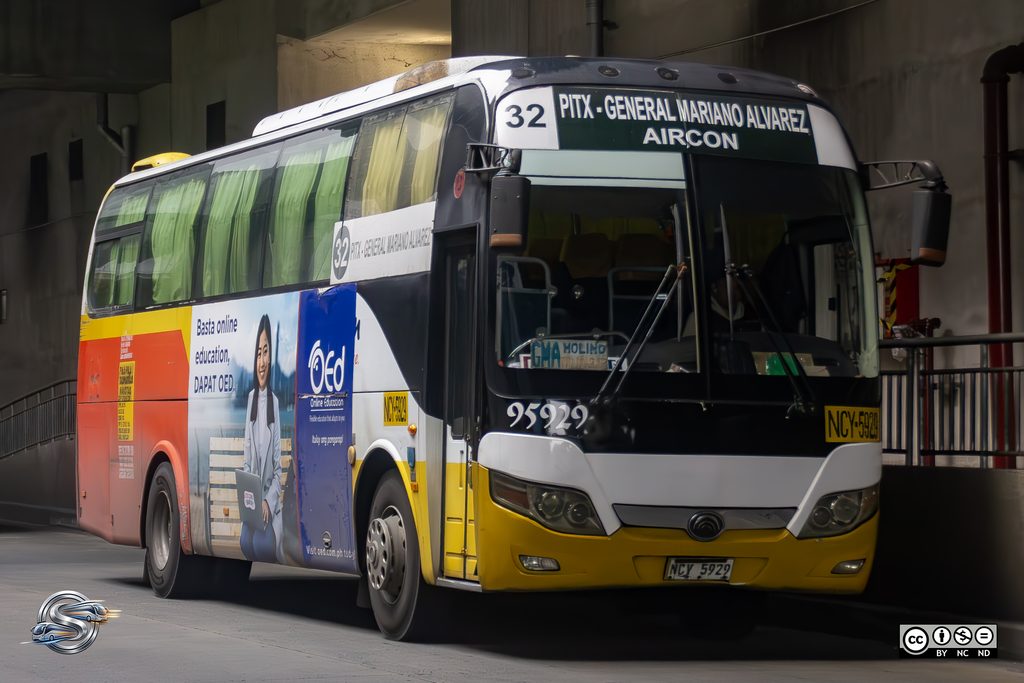
The Vehicle Model subsection lists all models available in the Philippines, now including the non-standard ones. The models are differentiated whether they are sold as completely built units (CBU), knockdown units (CKD or PKD), or as bare chassis models to be installed with a body.
The Body section lists the bus body models running in the Philippines. It may be a body that was made by the brand maker itself (CBUs) or by a third-party body assembler, and may have a name different from the vehicle model.
The Chassis section lists the bus chassis used in the Philippines, distinguished by its structure (ladder frame, integral, monocoque, modular, etc.). A semi-monocoque bus will have the same model listed as its body, while a vehicle model sold as a bare chassis will have the same model name in the Chassis section.
The Engine section, as you may have guessed by now, will of course list the engines used by buses here, distinguished by the combustion type, power, torque, and emission rating. Electric motor models will be listed here as well.
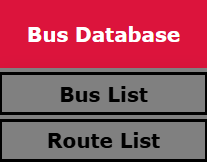
The second part is the Bus Database section, listing both individual Buses and the Routes where buses run. Information in the Bus List section include operator trade name, body number, and the specifications of the bus. The Route List contains the route description, the type of service (denomination) for the route as well as the location of its endpoints.
Now, you might be wondering, how about the bus plate number, chassis and engine numbers, the data for the operator, or the franchise list? It is known to me that one of the most sought-after data is about franchises, but you see, all these parameters I mentioned are covered by the Data Privacy Act of 2012, which controls how personally identifiable information can be released. Some of our bus operators are sole proprietors, who are protected by the DPA, and displaying the information we discussed, while harmless by themselves, may lead to privacy concerns when combined with other data. And while corporations are not covered by the DPA, I decided that for uniformity and fairness, that those personally identifiable information that I do not display for sole proprietors be hidden for corporations as well. But, of course, if you need that kind of information, you’re better off going to the LTFRB anyway, since they are more equipped to handle those kind of requests.

The third section is the Photo Archive where you can access the different photostreams for our contributors. We have received commitments from various bus photographers to contribute to our project, so always visit our site for updates on the photostreams!
That’s all I have for now. In later posts, we shall discuss certain aspects of the database, clarifying some concepts, and answering some frequently asked questions. You may visit the bus database through this link. Ciao!