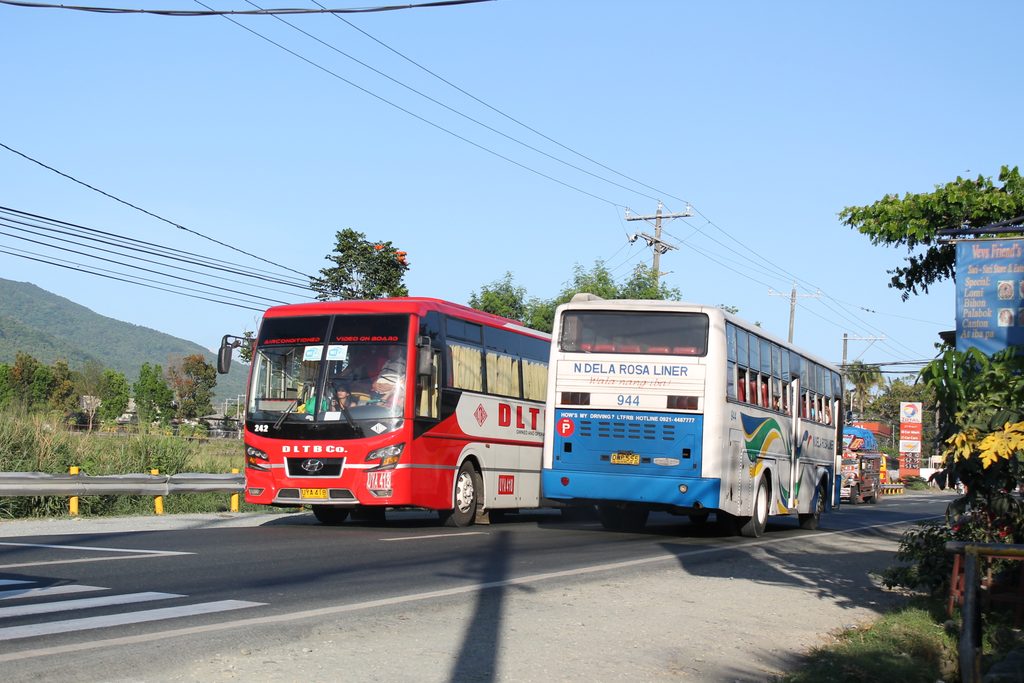
Hello, Jaybee here again. You might be wondering, where do we get information to fill up our bus database? This short blog will explain how we process information to display in our database.
Model Information
For standard models and its subcategories (vehicle model, body, chassis, engine), many of the information is readily available online. For some brands, information comes more easily than others: China brands, for example, usually has almost all the needed information on their websites. In contrast, local body assemblers do not usually post complete specifications, as they vary depending on the chassis used as the base of the bus. Sometimes we stumble upon obscure files that contain the needed information, but most of the time we just have to admit defeat and leave some information blank (not literally blank, as I usually place a “no data” annotation where I don’t know the information). Thankfully, there are a lot of third-party websites that, like us, collect information about engines, bus units, and the like, which we use as reference to many information we share in Bus Database PH. Thus, you may notice that our content is quite similar to others, but that’s the beauty of information, it can be conveyed by anyone for everyone’s benefit.
Route and Bus Information
For the routes, our go-to reference is the government agency in charge of franchising, the Land Transportation Franchising and Regulatory Board (LTFRB). Occasionally, the LTFRB releases public documents that list some routes and/or units as part of new relevant policies or information, which we use as reference to document the existence of such routes and units. For some other routes, the route descriptions printed on the bus units is sufficient for us to define it. It’s just a matter of going outside and seeing things in actual operation, basically.
Information gathering for the bus database is not a one-man job. Behind the scenes, fellow bus enthusiasts provide their help in identifying certain models, routes, and bus units, to provide a more accurate description of everything we encode in the database. This boosts our confidence that what we provide to end-users is genuinely correct. But of course sometimes we slip up because we’re only human, and we apologize if ever you come across few things that need to be corrected.
With so many information in the bus database, you might think we might have a hard time compiling it all, and you may be right. But every patronage of the Bus Database PH makes it all worth the effort. So I hope you support our endeavor in archiving bus photos and information in the Philippines by always visiting our site and utilizing our Bus Database as much as you can! In future blog posts, we’ll discuss some bus-related concepts, so I hope you will all stick around!
Hi to all! Today, I’ll be talking about the contents of the bus database, what to expect from it, and the future developments for the site.
The Philippine Bus Database is what it sounds like: a repository of data about buses here in the Philippines. My aim is to provide a comprehensive collection of photos and information about buses around the Philippines. The database is divided into sections, which we shall discuss in detail.
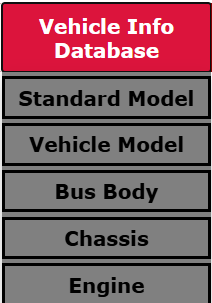
The first part is the Vehicle Info Database, divided into 5 subsections. The Standard Model database lists the production model buses running in the Philippines. Some of those models might be different from what is sold globally, so I should make it clear that models to be listed here are standard models for the Philippine market; examples include the unique Yutong ZK6105H, which as far as I am aware is produced in China yet sold only in the Philippines.
The Vehicle Model subsection lists all models available in the Philippines, now including the non-standard ones. The models are differentiated whether they are sold as completely built units (CBU), knockdown units (CKD or PKD), or as bare chassis models to be installed with a body.
The Body section lists the bus body models running in the Philippines. It may be a body that was made by the brand maker itself (CBUs) or by a third-party body assembler, and may have a name different from the vehicle model.
The Chassis section lists the bus chassis used in the Philippines, distinguished by its structure (ladder frame, integral, monocoque, modular, etc.). A semi-monocoque bus will have the same model listed as its body, while a vehicle model sold as a bare chassis will have the same model name in the Chassis section.
The Engine section, as you may have guessed by now, will of course list the engines used by buses here, distinguished by the combustion type, power, torque, and emission rating. Electric motor models will be listed here as well.
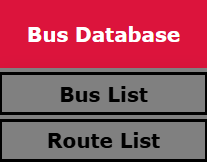
The second part is the Bus Database section, listing both individual Buses and the Routes where buses run. Information in the Bus List section include operator trade name, body number, and the specifications of the bus. The Route List contains the route description, the type of service (denomination) for the route as well as the location of its endpoints.
Now, you might be wondering, how about the bus plate number, chassis and engine numbers, the data for the operator, or the franchise list? It is known to me that one of the most sought-after data is about franchises, but you see, all these parameters I mentioned are covered by the Data Privacy Act of 2012, which controls how personally identifiable information can be released. Some of our bus operators are sole proprietors, who are protected by the DPA, and displaying the information we discussed, while harmless by themselves, may lead to privacy concerns when combined with other data. And while corporations are not covered by the DPA, I decided that for uniformity and fairness, that those personally identifiable information that I do not display for sole proprietors be hidden for corporations as well. But, of course, if you need that kind of information, you’re better off going to the LTFRB anyway, since they are more equipped to handle those kind of requests.
The third section is the Photo Archive where you can access the different photostreams for our contributors. We have received commitments from various bus photographers to contribute to our project, so always visit our site for updates on the photostreams!
That’s all I have for now. In later posts, we shall discuss certain aspects of the database, clarifying some concepts, and answering some frequently asked questions. You may visit the bus database through this link. Ciao!
Hello, everyone! I am Jaybee, site owner and creator of Rubyserve, and let me welcome you to my site! In this post, let me tell you my background, how I started this project, my rationales, and what I plan to do moving forward.
My coding background
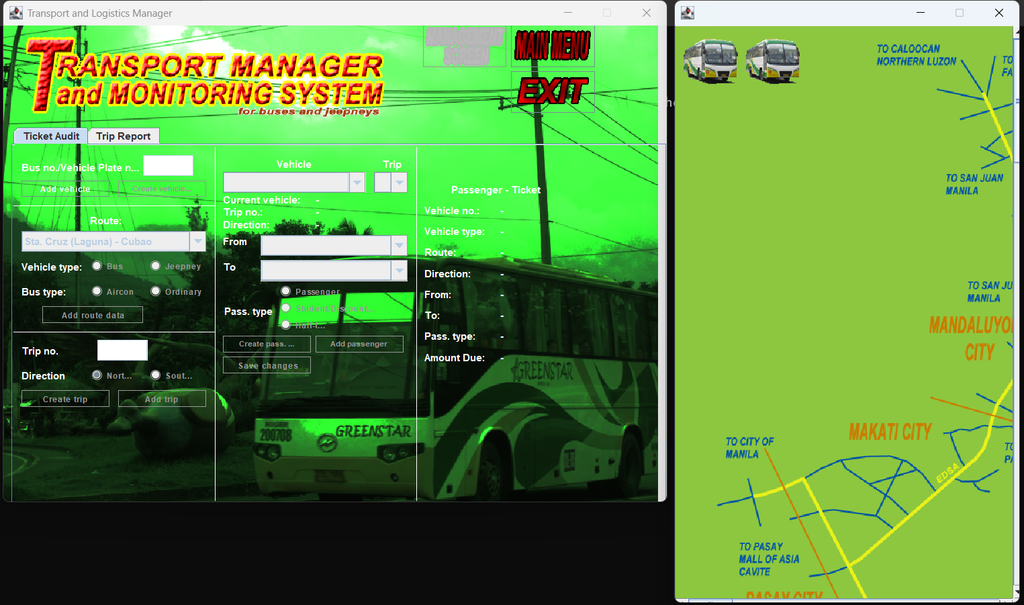
I was first introduced to coding during my college days, when I was required to take three computer science subjects for my BS Statistics course at UP Los Baños. Two of them were for the basic C programming language, but my favorite among them was the third (Object-oriented Programming) which introduced me to Java. I really credit my coding interest to my professor back then, who taught us the basics and encouraged us to go beyond it when doing our project, and who gave me one of my proudest UP moments by rating my final project as the highest among the class. (If my professor back in 2011-2012 is reading this, I want to say you’re the best!) That final output, which I called Transport Manager and Monitoring System was a manifestation of my dream to someday build a transport management computer system.
The project that started it all for Rubyserve
However, when I shifted courses, I followed what I thought what I wanted best that time and pursued an education degree in Social Studies (don’t get me wrong, I love this course). My coding took a back seat for the good part of the decade because of my studies, but I come back to it once in a while as a hobby, even creating a basic manual poll-counting program for my department’s annual student council elections for some years. And even when I graduated and eventually became a teacher, coding never escaped me entirely; during my second year teaching and I was assigned as the school librarian, I attempted to code a library catalog system to make my life easier.
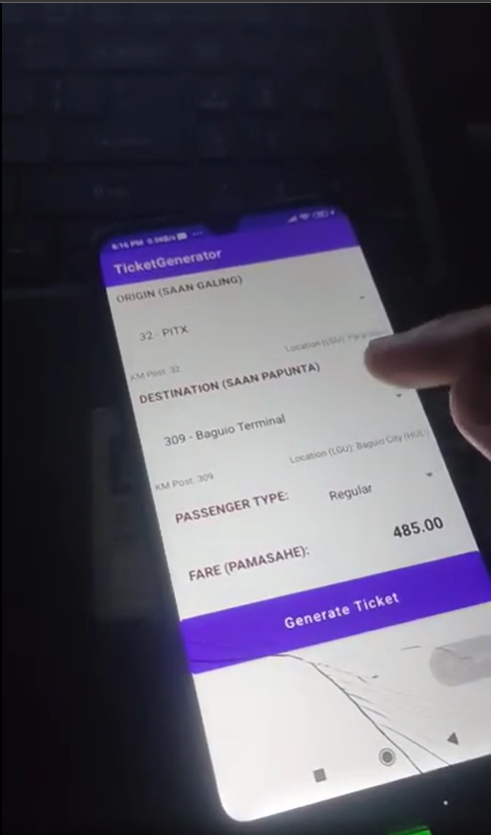
During the COVID-19 pandemic, I resigned as a teacher because I started to wear out from interacting with so many people in a span of 3 school years (yes, being a recluse sucks when your job requires socialization). I got a job as a freelance delivery rider, and with some of my newfound free time I decided to take an online Android programming course set up by TESDA. It was a delight, learning so much about mobile programming, and I was inspired to go back to my overarching project to build a transportation system. Back then, online reservation systems were just booming, and electronic ticketing systems were specialized. So I decided to create a bus ticketing system to be installed on an Android POS device, and made a prototype based on that.
Screen capture from a video featuring my prototype on a Samsung phone, as a proof of concept
But I realized back then that my skills were still lacking, as I was using Google Sheets back then as a database. So I studied some more on my own, and eventually came into HTML development. Along with studying HTML, I realized that what I really needed to realize my dreams was my own server, not only to have a site to test my programs, but also to put into practice what I was learning about server creation and management along the way. Thus, in 2024, rubyserve.com was purchased as my domain, and my project creation has been in full swing since then.
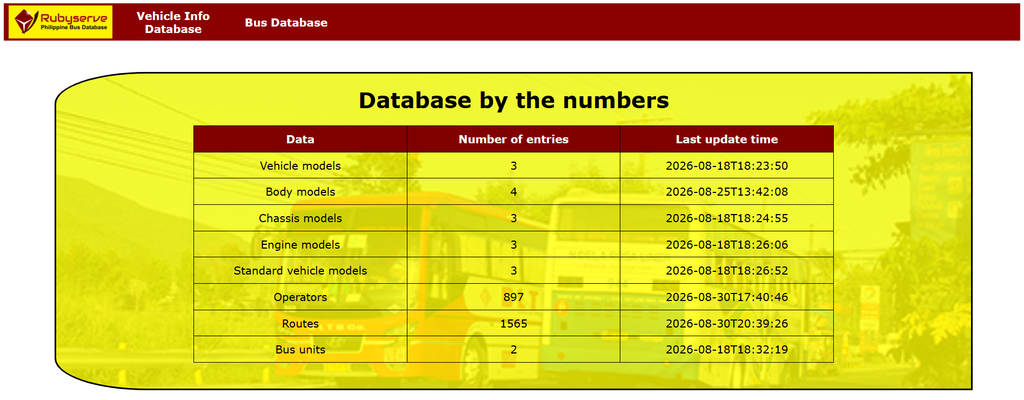
To apply what I self-learned about web programming, I decided that a small project would be best to serve as a prototype for my future projects, as well as serve as a portfolio so that potential customers can see that I really have a working site. Thus, I started Rubyserve with the Bus Database PH project. It may be basic (and quite ugly) but hey, it works! And there’s nothing to do but to improve it in the future, but it proved to everyone (including myself) that I can do this site.
The Rubyserve Philippine Bus Database main page during its launch
My bus enthusiast background
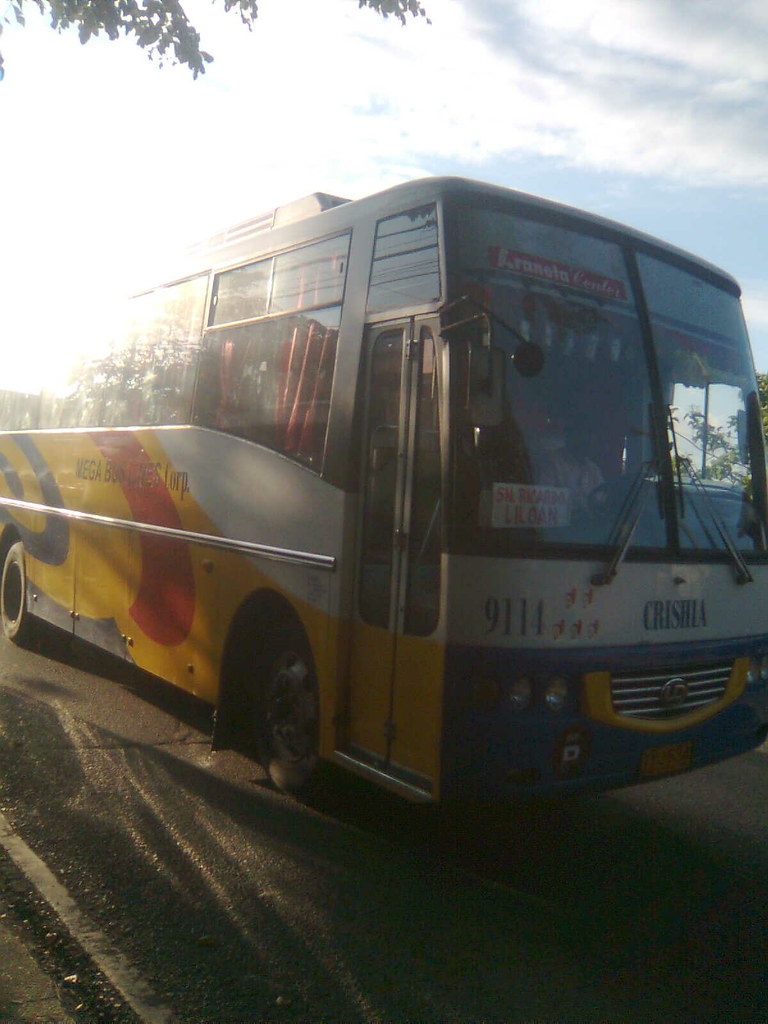
My bus enthusiast background runs for longer than my coding background! I started browsing bus photos in 2008, but it is not until October 2009 that I actually started taking photos of buses, using my Nokia phone. Unfortunately, I purged my oldest bus photo out of my Flickr because back then, only 200 photos were featured for free photostreams, so the oldest that remained (thankfully still in 2009) was this:
Mega Bus Lines 9114-5, taken November 1, 2009, currently my oldest photo
My Flickr bus photographer career eventually spanned 10 accounts, three main cameras, and around 1,500 photos across 3 years from 2009-2012 and a brief resurgence in 2017. I used the handle Silverblur so some of the frequent browsers of Flickr may remember me as one of the “spec-masters”, who were fond of captioning our photos with specifications of buses.
Due to some personal issues I faced in the middle of 2012, I took a hiatus from bus photography, but never quite have forgotten my biggest interest. In 2016, after the release of the DOTC Open Data, which included data on provincial bus franchises, I undertook one of my biggest project back then: my personal Bus Inventory, which lists each and every bus running in the Philippines (realistically, only the data I can get my hands on were in it). This Bus Inventory served me well and led to me being inducted as an administrator of Philippine Bus Photographers Association (PBPA), the group which I am still proud of, and to whom I initially created the Bus Database PH for. (To disclose, the PBPA is one of the reasons I took a hiatus in 2012 because I was involved in bashing them, and a few others as well, so by being ironically inducted as their admin 6 years later in 2018 made me go out again as a bus spotter. Everyone was cool with that story anyway, so I have no problem sharing that!).
The Bus Inventory served me well when studying many aspects of the bus industry, as with that inventory I managed to understand things such as franchising processes and trends in the bus industry. This led me to being acknowledged as the PBPA’s “walking LTFRB” as I can explain some complicated aspects about franchising with ease. (Another disclosure, I am also a transport operator now, though in a different denomination, but still the same concepts). Eventually, I have two trusty companions, Ron and Juswa, who maintain the Bus Inventory with me to make sure it is up to date.
As to photo contributions, I rarely go out now due to financial constraints, but when I do, I spot early morning until sunset (or realistically until I got drowsy), or as I call it, “Hop Till You Drop” (a phrase I coined in 2012 and is proudly printed on t-shirts for PBPA). My memory card contains no less than 400 photos on a good day, and sometimes my 8GB memory card would even be fit to bursting!
The Bus Database PH project is basically a wedding of my coding and bus-enthusiasting, combining my two interests into one website, free for all to browse so that I can share what me and my colleagues have.
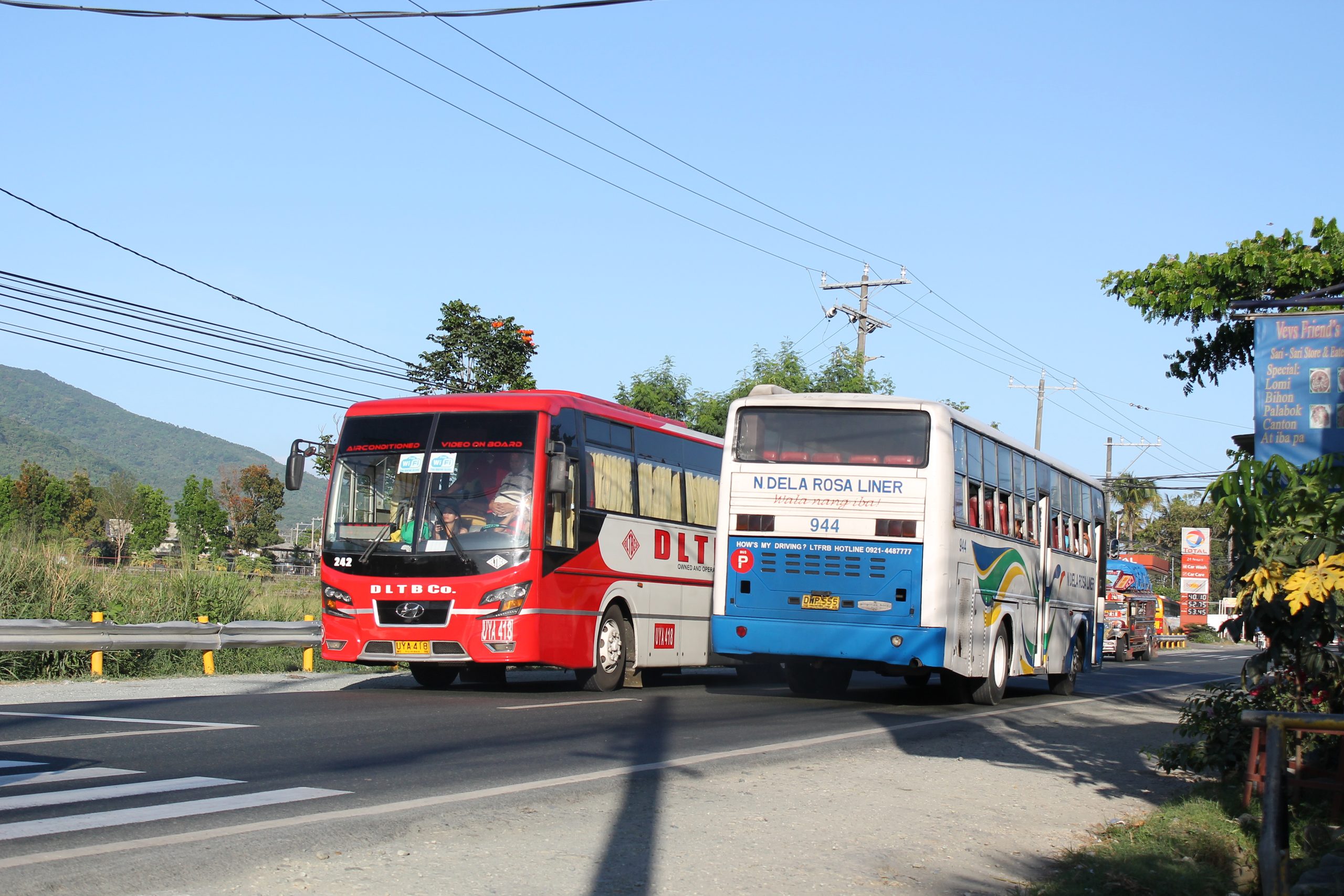
The actual photo I used as a background for one of the Bus Database PH elements, taken in 2013.
Where the name Rubyserve came from
The name “Rubyserve” is a portmanteau of “ruby”, which is my birthstone, and “reserve“, as in ticket reservation, as the first project I undertook under this name was the prototype for the bus ticketing system (actually part of a bus reservation system). I figured the “serve” part would serve (hehe) me well as the Rubyserve projects is to eventually be for the service of multitudes of passengers, students, and enthusiasts. The usage of Ruby is adapted from my first blog, Rubygem, which eventually became my business name for various dealings (most importantly Rubygem Transport Service, my TNVS business).
What lies in the future
The Bus Database PH, as I said previously, is a prototype of things to come. So what actually is to come?
For now, I have two major projects in mind:
The Bus Reservation and Ticket System, which is essentially the continuation of my first mobile app project. This project is to create a digital bus trip booking system, quite similar to some of those already in market, but hoping to differentiate in that it is to be twinned with the POS-style ticketing system, enabling bus conductors to confirm bookings on the fly and maybe someday allow on-demand, on-the-spot bookings. Eventually, I was hoping to expand this with the Bus Operations Management System, which would include maintenance scheduling, payrolls, and all the management stuff.
The School Student Management System, which is similar as well to some of those already in market, but we’ll see how I can differentiate it when the project is in full swing! This is in partnership with my two best friends who are (still) teachers.
The beginning is always the most humble part of any website, and mine is no exception. I still have a lot to learn to accomplish my ambitious goals, but if Bus Database PH proved anything, it’s that a good enough dream could drive a person into doing what he thought impossible 2, 3, 5, or 10 years ago (really, if you told me in 2012 that I’ll grow up to have a website I built myself, I might have laughed at you). Here’s hoping to a successful and inspired programming business, and I hope you stick around long enough to see me accomplish all this! Everyone’s support means so much for me. Many thanks for taking your time to read this!